

Doors That Block Noise: How to Improve Sound Insulation
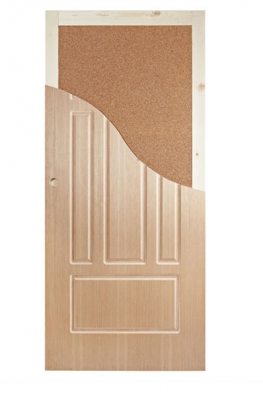
Doors that block noise: techniques to improve acoustic insulation
Noise in residential buildings has become one of the most common problems for people living in apartments. Not only noise from neighbors, but also sounds generated inside the home can be disturbing. In many cases, noise coming from an adjacent room can be particularly annoying, especially when concentration or rest is required.
Acoustic insulation and sound absorption: not the same thing
Before explaining how to soundproof a door, it is important to distinguish between two key acoustic concepts:
- 🔇 Acoustic insulation: prevents noise from entering or leaving a room.
- 🎶 Sound absorption: improves interior sound quality by reducing reverberation.
In a typical home, the main issue is acoustic insulation of doors. You can explore related topics using the Vilssa acoustic insulation search.
The role of mass in acoustic insulation
To achieve effective noise insulation indoors, the most efficient strategy is to increase the mass or density of the element acting as a barrier. This principle also applies to other building elements, as explained in Vilssa articles on wall insulation.
The challenge is that doors are usually lightweight elements, which limits their acoustic performance.
Techniques to reduce noise passing through a door
Below are several practical measures that can help improve door sound insulation. None of them guarantees complete soundproofing, but all contribute to reducing noise transmission.
- 🚪 Do not seal all gaps without considering ventilation
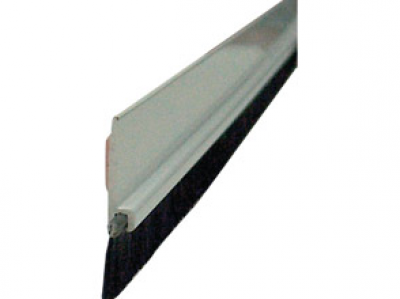
Sealing gaps with weatherstripping reduces noise, but also eliminates natural air circulation between rooms. This must be carefully evaluated in homes without mechanical ventilation. - 🪵 Install a solid-core door
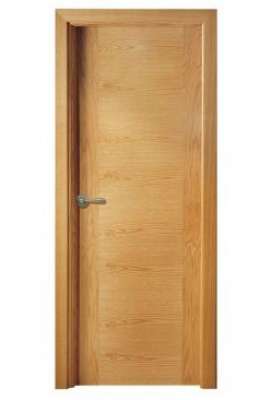
Replacing a hollow door with a solid-core door is one of the most effective solutions. Hollow doors perform very poorly in terms of sound insulation. - 🧱 Add insulation inside the door
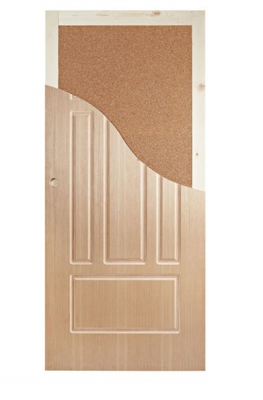
Acoustic performance can be improved by adding high-density materials such as cork or wood wool. This increases mass without fully solidifying the door. - 📊 Check sound insulation ratings in decibels
Doors usually provide insulation values between 25 dB and 55 dB. For most homes, around 35 dB is sufficient, depending on personal noise sensitivity. - 🪟 Avoid glazed doors
Glass is the weakest point from an acoustic perspective. Even with improvements, it will remain the area where most noise passes through.
If noise problems are widespread, it may be useful to explore complementary solutions, such as those discussed in Vilssa articles on interior wall defects.
Summary: door acoustic insulation
| Solution | Noise reduction level |
|---|---|
| Weatherstripping | Medium |
| Solid-core door | High |
| Internal insulation | Medium–High |
| Certified acoustic doors | High |
| Glazed doors | Low |
Content produced by the editorial team of construccion.vilssa.
Publicaciones relacionadas:
 10 Effective Ways to Reduce Urban Traffic and Improve Sustainable Mobility
 Triple-glazed windows: complete guide to improving your home’s insulation
 Concrete Façade Panels with Internal Insulation: How They Work
 Paneles semi-prefabricados de hormigón. Eco-block
 Una silla, un puff o una mesilla Block de PLM design
 Thermal Insulation Materials: Types, Uses, and How to Choose the Best Option for Your Building