

Polymer Concrete Ventilated Façades: Definition, Advantages and Applications
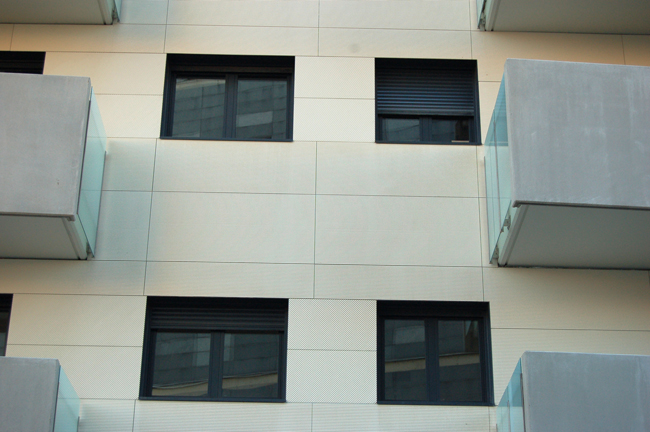
How to apply polymer concrete ventilated façades in buildings
Polymer concrete ventilated façades are an advanced construction solution within modern building envelope systems. Although the term “concrete” may be misleading, this material differs substantially from traditional concrete and offers clear advantages in terms of weight, durability, and design flexibility.
- 🧪 Understand what polymer concrete really is
Polymer concrete contains no cement in its composition. Unlike conventional concrete, it is made using synthetic resins—typically polyester resins—that replace cement as the binding agent, resulting in a material with very different physical and mechanical properties. A general material overview can be found on Wikipedia’s polymer concrete entry. - ⚙️ Differentiate it from traditional concrete
While conventional concrete relies on cement hydration and is usually combined with steel reinforcement, polymer concrete achieves its strength directly through the polymer matrix. This eliminates the need for steel reinforcement and significantly reduces the overall weight of the elements. - 🪶 Take advantage of its low weight and high strength
Thanks to its resin-based composition, polymer concrete is much lighter than traditional concrete while maintaining high mechanical resistance. This makes it especially suitable for ventilated façade systems, where the self-weight of cladding elements is a critical design factor. - 💧 Benefit from very low water absorption
The presence of resins makes polymer concrete almost impermeable, with extremely low water absorption. This property improves durability and resistance to weathering, which is essential for façade applications exposed to outdoor conditions.
- 🏗️ Apply it correctly in ventilated façade systems
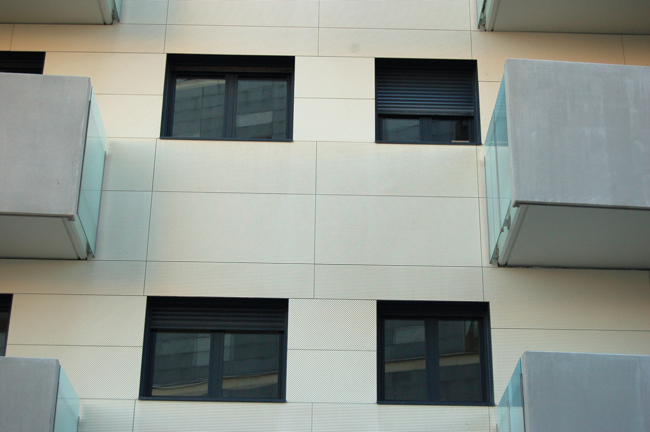
Polymer concrete has long been used in prefabricated elements such as cornices, window sills, pool components, and landscaping features. Its application in ventilated façades allows the use of cladding panels fixed to a substructure, creating an air cavity that enhances the thermal performance of the building envelope. - 🌬️ Integrate it into energy-efficient building envelopes
Ventilated façades are among the most efficient systems from an energy-performance perspective. The use of polymer concrete panels, together with other prefabricated solutions such as concrete façade panels with internal insulation, helps improve thermal insulation, reduce building pathologies, and extend service life. - 🎨 Exploit its formal and aesthetic versatility
One of the key advantages of polymer concrete is its excellent moldability. This material allows the creation of curved shapes, bespoke architectural designs, a wide range of colors, and multiple surface textures, offering greater design freedom compared to traditional façade materials. - 🏛️ Use it as an alternative to traditional materials
Polymer concrete represents a viable alternative to natural stone, brick, wood, or continuous renders, especially in projects seeking a contemporary, industrialized appearance with low maintenance requirements. - 📌 Rely on specialized manufacturers
Industrialized façade solutions based on this material are already well established. Systems developed by manufacturers such as ULMA Architectural Solutions apply polymer concrete to ventilated façades using proven technical and architectural criteria.
Technical summary of polymer concrete in ventilated façades
| Aspect | Polymer concrete |
|---|---|
| Binder | Synthetic resins (cement-free) |
| Weight | Very lightweight |
| Water absorption | Very low |
| Steel reinforcement | Not required |
| Main application | Ventilated façade cladding |
| Key advantages | Design flexibility, durability, energy efficiency |
Content written by the editorial team at construccion.vilssa.
Publicaciones relacionadas:
 Freestanding prefabricated concrete lattice
 Stretch Vinyl Ceilings: What They Are, Features, and Advantages
 Microgeneration Systems: How They Work and Their Advantages
 Are Prefabricated Wooden Houses Worth It in 2025?
 How to repair a parquet floor: practical step-by-step guide
 Differences Between Artist and Artisan: Art vs Craft