

Glass Blocks in Modern Architecture: Uses and Advantages
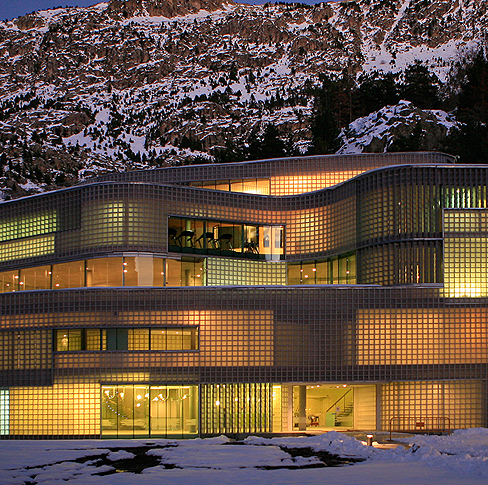
Glass blocks in contemporary architecture: uses and advantages of glass bricks
Definition. Glass blocks, also known as glass bricks, are prefabricated construction elements made of two glass shells hermetically sealed together. They are designed to allow natural light to pass through while preserving privacy and providing thermal and acoustic insulation.
Glass blocks. For decades, walls made of glass blocks—typically in formats close to 20 × 20 × 10 cm—were widely used in public buildings and residential architecture as a solution to illuminate spaces without direct visual exposure. Their main purpose was clear: let light in without revealing what lies on the other side.
Over time, their use declined in favor of materials perceived as more modern, such as translucent, colored, or screen-printed glass. For several years, glass blocks were associated with a retro architectural style and were often considered outdated.
However, glass blocks remain a highly relevant architectural solution. Technological advances and new design developments have brought them back into contemporary architecture, where they are now integrated naturally into modern projects.
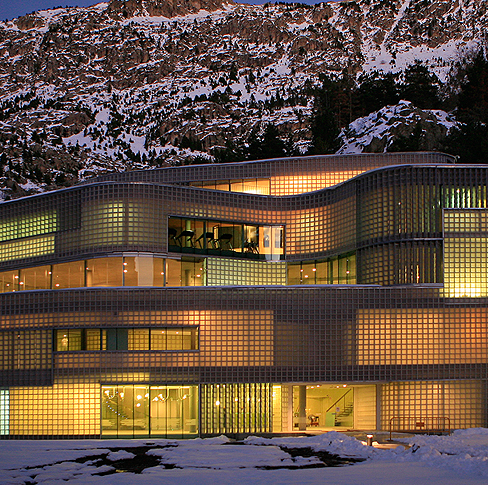
High-performance and reflective glass blocks
One of the most significant current innovations is the development of reflective glass blocks, designed to meet today’s energy-efficiency requirements for building façades.
These blocks retain the traditional construction principle—sealed layers of translucent glass—but incorporate advanced technical features such as solar filters, reflective coatings, and even the integration of energy-related technologies.
Some models include an internal metal oxide layer capable of reflecting a large portion of solar radiation. Reduced internal pressure compared to the exterior improves both thermal and acoustic insulation. In addition, these blocks filter up to 90% of ultraviolet radiation.
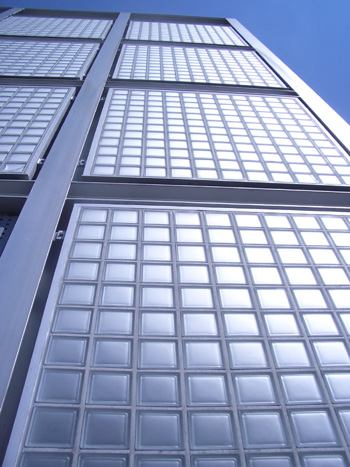
Technical criteria for choosing glass blocks
- ☀️ Light transmission
Glass blocks allow diffused natural light to enter, reducing glare and improving visual comfort. - 🔊 Thermal and acoustic insulation
Their sealed structure enhances sound insulation and reduces heat loss. - 🛡️ Mechanical resistance
Glass blocks offer higher resistance than conventional glass partitions. - 🎨 Aesthetics and design
Contemporary finishes provide porcelain-like surfaces, optical effects, and a visual language compatible with avant-garde architecture.

Summary table: glass blocks in architecture
| Feature | Glass blocks | Conventional glass wall |
|---|---|---|
| Light entry | High and diffused | High and direct |
| Privacy | High | Low |
| Insulation | Medium–high | Low |
| Resistance | High | Medium |
Technical summary. Glass blocks are an effective architectural solution for introducing natural light while maintaining privacy and improving insulation. Modern glass blocks incorporate reflective treatments and enhanced thermal performance, making them fully compatible with contemporary architectural design.
Source. Technical guide prepared by the Vilssa editorial team, specialized in architecture, interior design, and construction materials.
To learn more about glass blocks or explore additional content on modern architecture, you can use the Vilssa search engine.
As an external technical reference, you may consult Seves Glassblock, a leading manufacturer of architectural glass blocks.
Publicaciones relacionadas:
 How to Decorate Glass Jars with a Snow Effect for Christmas
 How to Install a False Ceiling at Home: Types, Uses and Costs
 Wall Lamps: Characteristics, Uses and Types of Wall Sconces
 Stretch Vinyl Ceilings: What They Are, Features, and Advantages
 Microgeneration Systems: How They Work and Their Advantages
 Polymer Concrete Ventilated Façades: Definition, Advantages and Applications