

Best Home Orientations for Temperate and Cold Climates: A Practical Guide
How to Choose the Best Home Orientation in Temperate and Cold Climates
In a previous article, we discussed the best orientations for homes in hot and humid climates. In this guide, we focus on the most effective home orientations for temperate and cold climates, where solar radiation changes significantly throughout the year and energy efficiency becomes essential.
According to the International Energy Agency (IEA), proper building orientation can substantially reduce annual energy consumption, especially in regions with strong seasonal contrasts.
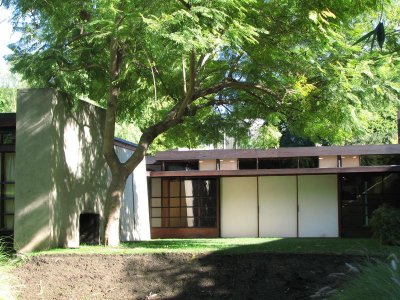
Kings Road House, West Hollywood, California
🌤️ Best Orientations for Temperate Climates
In temperate climates, the height of the sun varies greatly throughout the year. Summers are warm and dry, while winters are cold and more humid. As a result, homes must be designed to balance solar gain and protection.
Main design goals in temperate climates:
- 🌞 Provide summer shading to avoid overheating.
- ❄️ Take advantage of winter solar gain to improve thermal comfort.
- 🧱 Reduce heat loss during cold months.
- 🏡 South-facing rooms are ideal if summer shading is properly designed.
- 🔥 Avoid west-facing main rooms because afternoon sun can cause excessive heat.
❄️ Best Orientations for Cold Climates
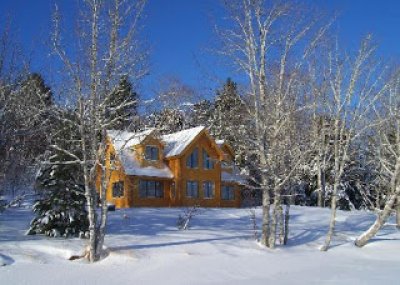
At higher latitudes, solar radiation strikes the ground at a very low angle, which makes sunlight a scarce yet valuable resource. The priority in these regions is maximizing any available solar energy.
Recommended strategies:
- ⬆️ Maximize south-facing openings to capture as much light and heat as possible.
- ⬇️ Keep north-facing windows to a minimum to reduce thermal losses.
- 🌅 East and west orientations are acceptable, as solar radiation is generally low.
- 🏠 Use compact building shapes to minimize exposed surface area.
- 🪵 Choose materials with high thermal mass to store heat more effectively.
To learn more about home orientations in hot climates, visit the related article:
Best orientations for homes in hot climates
📊 Comparative table of home orientations by climate
| Aspect | Temperate climate | Cold climate |
|---|---|---|
| Main objective | Balance winter solar gain and summer shading | Maximize limited solar radiation available |
| Ideal orientation for main rooms | South, with proper summer shading | South, to capture as much heat as possible |
| Orientation to avoid | West (summer overheating) | None in particular; sunlight is limited overall |
| Window size by orientation | Moderate west, large south, controlled east | Small north, large south, medium east/west |
| Need for solar protection | High in summer, especially south and west | Low; insulation is the priority |
| Thermal insulation | Moderate; varies depending on the season | Very high, especially on windows and roofs |
| Building shape | Flexible; larger exposed surfaces are acceptable | Compact, to minimize heat loss |
® Written by the editorial team of decoracion.vilssa
Publicaciones relacionadas:
 How to Achieve an Energy-Efficient Home: Practical Low-Energy Strategies
 How to Measure on a Floor Plan: A Practical Step-by-Step Guide
 How to Turn a Train Carriage into a Home – Ideas, Costs, and Tips
 Simple and Original Ideas to Decorate Your Home for Christmas
 How to Install a False Ceiling at Home: Types, Uses and Costs
 Guide to Buying a Wood Stove or Fireplace: Key Differences and Heating Efficiency