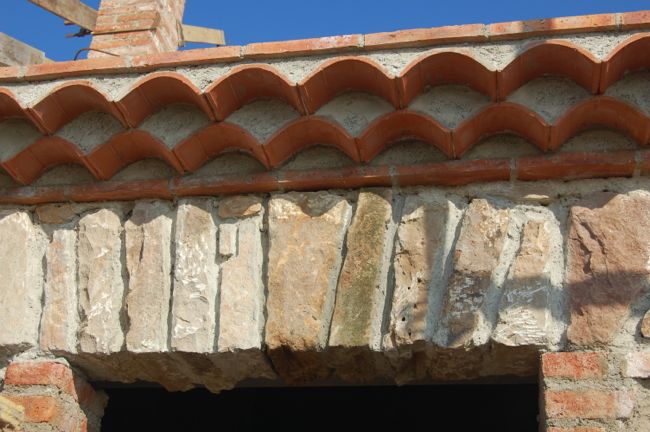
How to Build a Stone Voussoir Lintel Step by Step
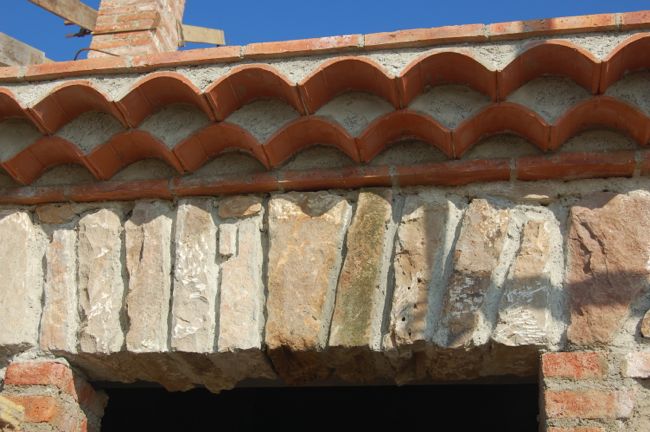
How to Build a Stone Voussoir Lintel Step by Step
There are traditional construction techniques that are rarely used today, such as stone lintels made from voussoirs. In the past, stonemasonry was a highly valued trade in construction, but today it is increasingly difficult to find skilled craftsmen capable of carving and assembling stone using traditional methods.
Traditionally, window lintels—the structural element supporting the facade above an opening—were built using wooden beams, large monolithic stone pieces, or curved systems such as arches made from stone, brick, or ceramic voussoirs.
A lintel can be built in two main ways: as a horizontal lintel or as a curved lintel in the form of an arch. From a structural point of view, arches are more efficient and safer, as they transfer loads more effectively.
🧱 Stone voussoir lintels versus modern solutions
Horizontal stone voussoir lintels are more complex to execute than arches because they work less efficiently under vertical loads. As a result, their span is limited and depends heavily on material strength and construction accuracy.
In modern construction, these structural challenges are usually solved using reinforced concrete lintels or steel lintels, both capable of supporting large loads and wide openings. This has relegated traditional stone lintels mainly to restoration, heritage architecture, and aesthetic applications.
🔨 How to build a horizontal stone voussoir lintel
In this article, we explain how to build a horizontal stone lintel using voussoirs, formed by small carved stone pieces arranged so that they can support the weight of the masonry above.
The structural principle is similar to that of an arch: the voussoirs mainly work in compression. However, in the case of a horizontal lintel, the system is less efficient and requires greater precision.
📐 Construction steps
- 🪨 Carve the voussoirs: prepare trapezoidal stone pieces. The central piece, known as the keystone, is symmetrical, while the side voussoirs have an isosceles trapezoidal shape.
- 🪵 Formwork installation: before placing the stone pieces, install temporary wooden formwork using boards and props to support the lintel during construction.
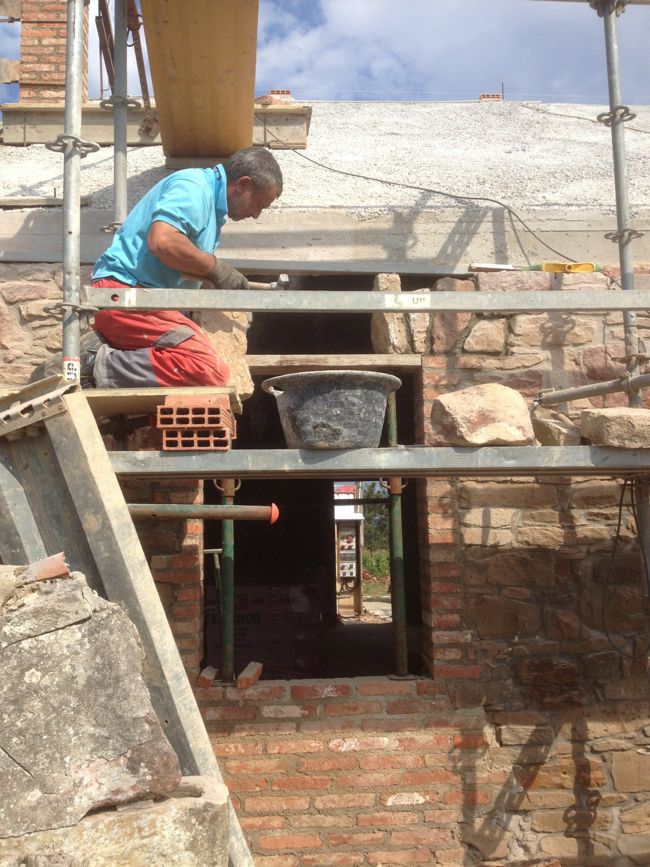
- 🧩 Dry fitting: place the voussoirs temporarily on the formwork to check alignment, geometry, and fit.
- 🔑 Install the keystone: the last piece to be placed is always the keystone, which balances the system and transfers vertical loads.
- 🧱 Mortar bonding: although in theory the lintel could work by friction alone, it is advisable to use bonding mortar, especially when the stone pieces are irregular.
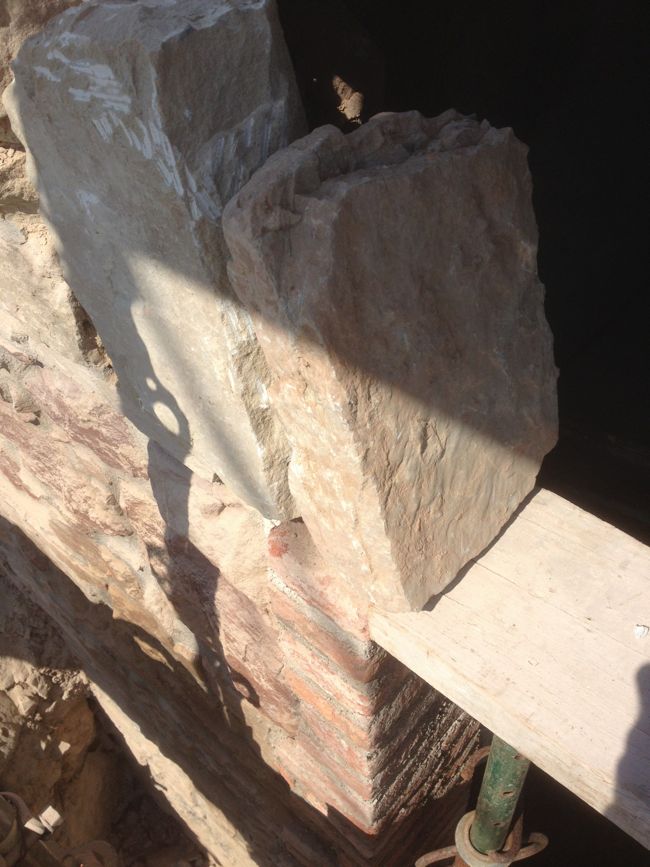
- 🔩 Additional reinforcement: it is recommended to insert steel rods to connect the lintel with the surrounding masonry, improving overall stability.

- ⏳ Formwork removal: once the mortar has set, the formwork can be removed. If properly executed, the lintel will safely support the facade above.
📋 Summary table: stone voussoir lintel
| Aspect | Description |
|---|---|
| Lintel type | Horizontal stone voussoir lintel |
| Material | Carved natural stone |
| Structural principle | Compression through the interlocking of voussoirs |
| Difficulty | High (requires precision and experience) |
| Current use | Restoration, traditional architecture, aesthetic applications |
Content reviewed by the Vilssa editorial team.